

SPA BEGINS WITH WATER
The story of SPA did not begin with a massage table. Not with scented candles, elaborate treatment names or shelves lined with skincare products. It began with water.
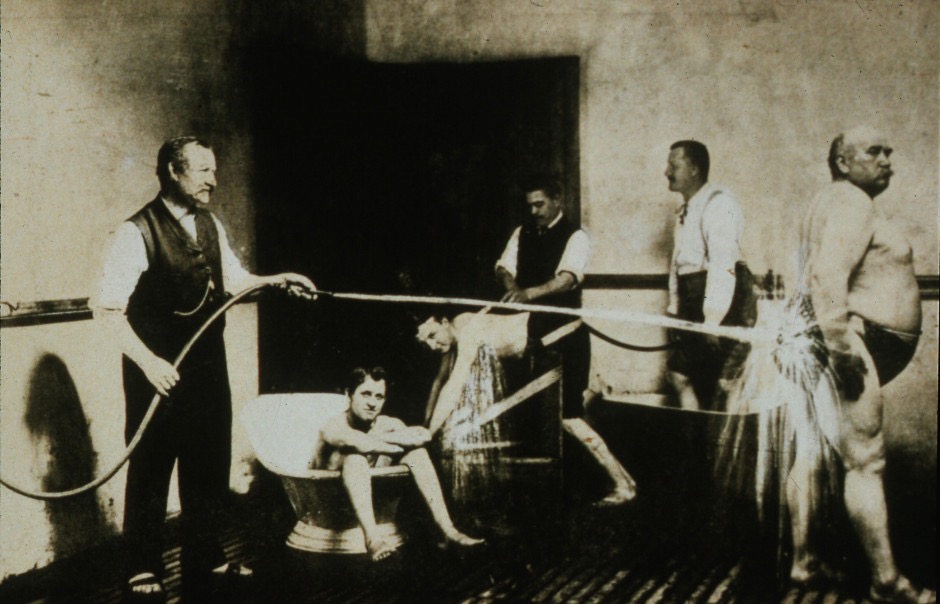
Water was the first treatment, the first space, the first element the body encountered. It was a place for cleansing, resting, moving, warming the body and cooling it down. Around water, ancient bathing cultures took shape — thermal baths, Roman bathhouses, Japanese ofuro rituals and the historic hydrotherapy sanatoriums of Europe.
Today, water is often seen as merely a preparation for the “real” treatment. Tačiau hidroterapijos istorija primena: kartais pati procedūra ir yra vanduo.
BAD WÖRISHOFEN: WHERE WATER BECAME A METHOD
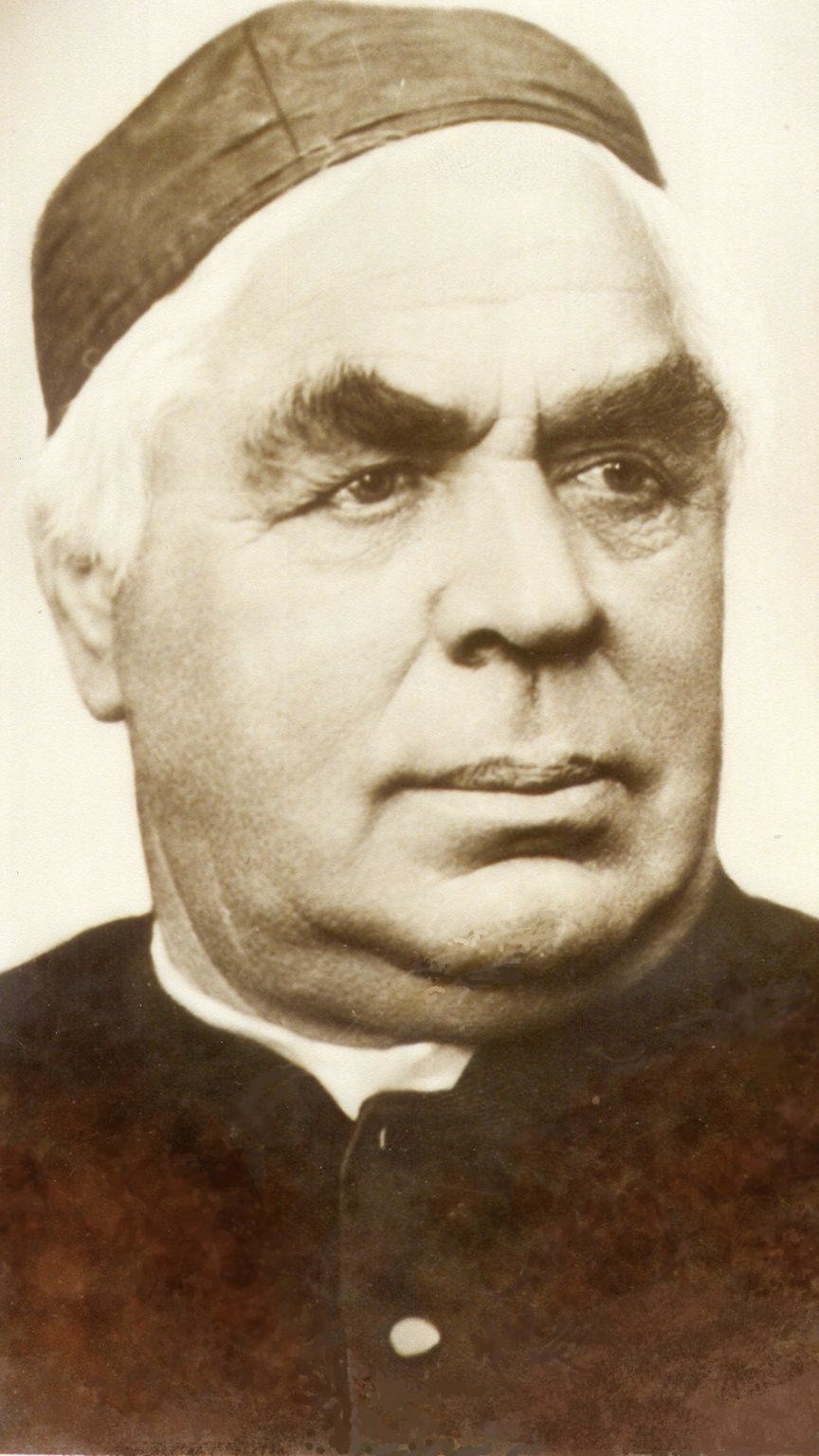
In the 19th century, the small Bavarian town of Bad Wörishofen became one of Europe's most important centres of hydrotherapy. It was here that the priest Sebastian Kneipp (1821–1897) lived and worked. While studying theology and struggling with a serious illness, he became interested in cold-water treatments, experimenting with them himself before gradually developing a systematic approach based on his experiences.
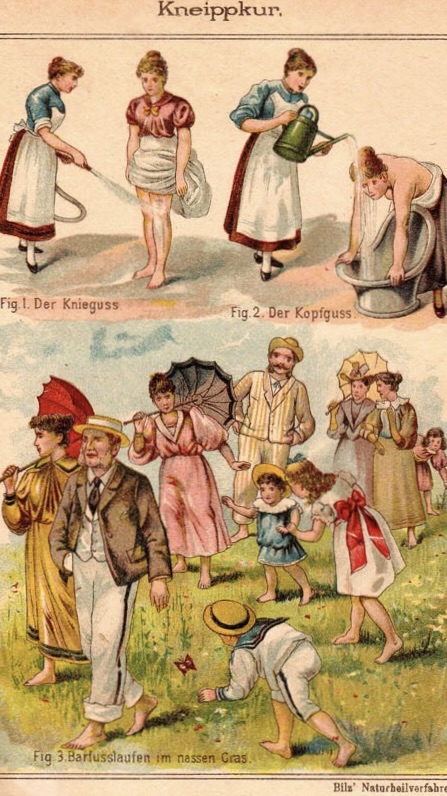
Kneipp’s method extended far beyond his renowned water affusions and walking through cool water. His approach also included baths and foot baths, showers, body wraps, compresses and herbal remedies. At the heart of his philosophy of health were five essential pillars: **water, medicinal plants, movement, nutrition and inner balance.**
Thousands of people travelled to Bad Wörishofen seeking Kneipp’s care. Among its visitors were members of the European aristocracy and royal families.
Published in 1886, Kneipp’s book *My Water Cure* (*Meine Wasserkur*) became one of the most widely recognised works on hydrotherapy of its time. By the early 20th century, it had already been translated into dozens of languages around the world.
Today, many of Kneipp’s remedies might raise a smile, while some would undoubtedly draw criticism from modern medical professionals. Yet an important idea remains at the heart of his legacy: water can be applied with the same precision and care as movement, rest or touch.
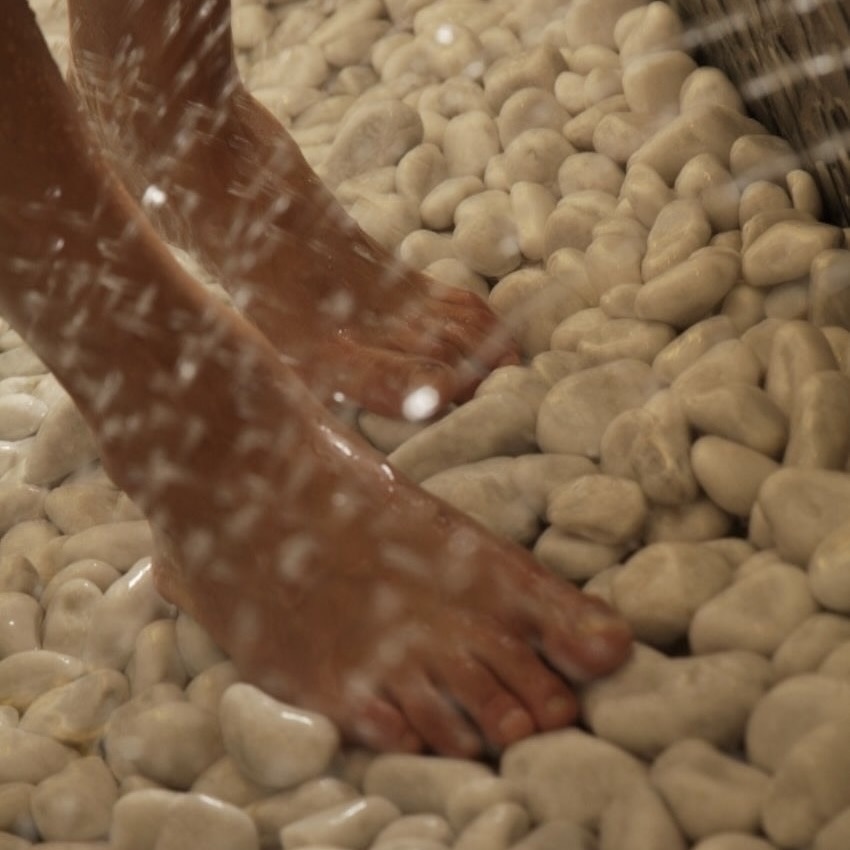
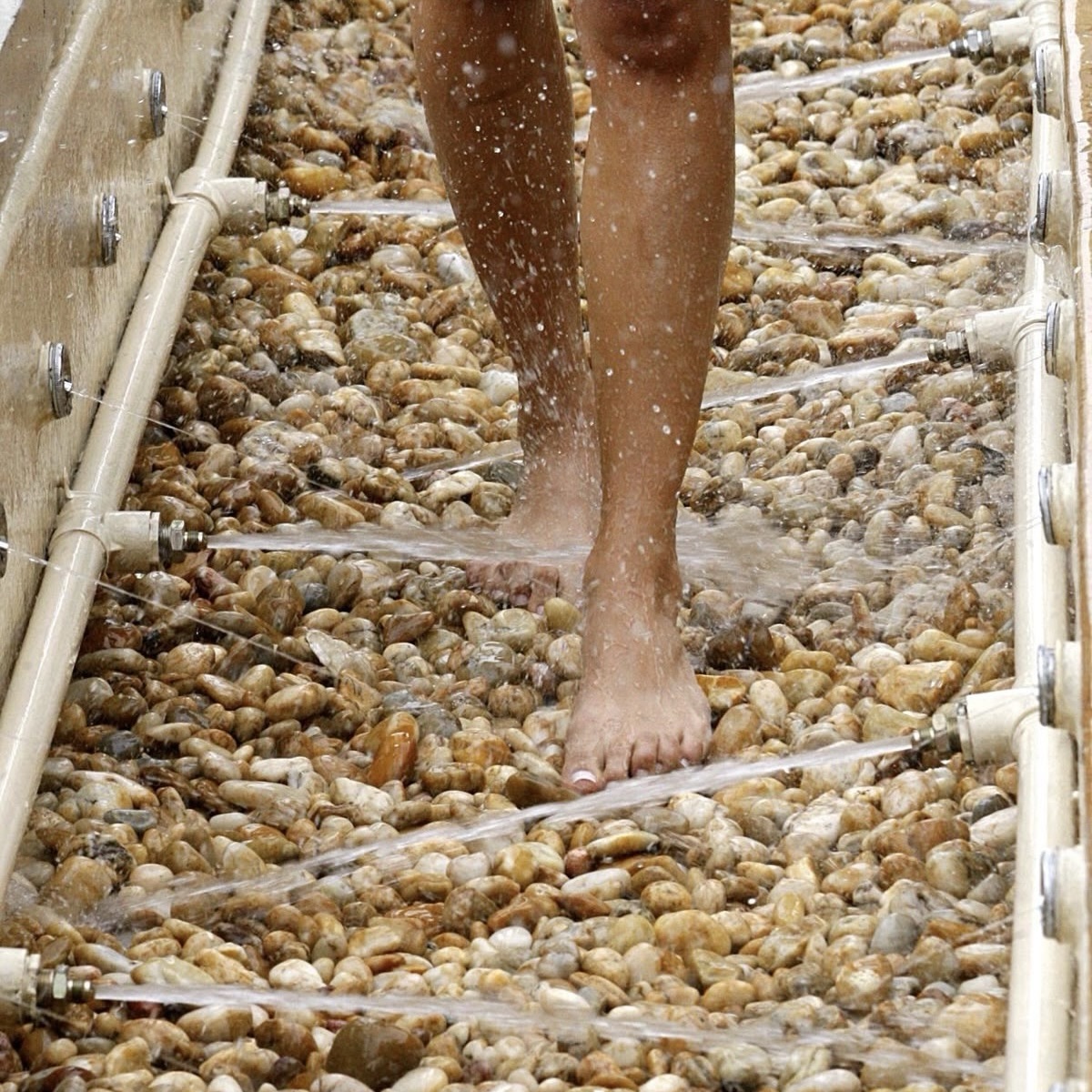
Photo sourse: Pinterest
WHEN SPA LOSES TOUCH WITH ITS ROOTS
Traditional SPA spaces were designed around water. Swimming pools, mineral baths, steam rooms, showers and relaxation areas formed a seamless sequence of treatments and rituals.
However, towards the end of the 20th century, the rapidly commercialising SPA industry began to change. Sophisticated water-based facilities required considerable space, specialised expertise and constant maintenance. Wet areas gradually gave way to additional massage rooms, while water became little more than a backdrop to increasingly extensive treatment menus. The body was anointed with oils, exfoliated and wrapped, yet the culture of bathing itself was increasingly pushed aside.
Today, water-based treatments are finding their way back into contemporary SPA spaces. Not merely as a luxury, but as a thoughtfully designed sensory and physiological experience. It is not only baths and showers that are returning. It is also the understanding that water is not simply an empty space between two treatments.
WHAT IS HYDROTHERAPY, REALLY?
Hydrotherapy is the purposeful use of water at different temperatures and pressures, as well as water in motion, for therapeutic purposes.
The term encompasses a wide range of experiences: professional aquatic rehabilitation, mineral and thermal baths, compresses, hand and foot baths, water affusions, vertical and horizontal showers, steam baths and contrast water rituals.
When the body is immersed in water, it is influenced by more than temperature alone. The buoyancy of water reduces the sensation of weight and strain on the joints. Hydrostatic pressure acts evenly upon the body's tissues, while water resistance allows the body to move in ways that differ from movement on land.
Flowing water creates an entirely different sensory experience. By adjusting the direction, pressure and temperature of the water, we can move from the gentle sensation of rainfall to a more invigorating water massage. The language of hydrotherapy is one of warmth and coolness, pressure, movement and time.
IMMERSION: WHEN WATER SUPPORTS THE BODY
Bathing is one of the oldest and simplest forms of hydrotherapy.
When immersed in water, the familiar sensation of body weight diminishes. Water supports and envelops the body, allowing the muscles, if only for a moment, to find relief from their constant effort against gravity.
In modern hydrotherapy baths, this experience is enhanced by water jets of varying intensity and direction. Yet the essence of the treatment remains unchanged: warmth, immersion and time.
In Japanese bathing culture, this experience takes the form of the *ofuro* — a deep soaking tub. It is not intended for washing; the body is thoroughly cleansed before entering. The purpose of the ofuro is simply to spend a quiet, unhurried moment immersed in warm water.
This is an important distinction. One thing is to cleanse the body. Quite another is to simply let it rest in water.
VICHY SHOWER & SWISS SHOWER
A Vichy shower can be enjoyed as a standalone hydrotherapy treatment or incorporated into body exfoliation, wraps and other SPA rituals. Here, water is no longer merely a backdrop or a means of rinsing away products. It becomes a touch.
A Swiss shower features several water jets positioned at different heights, directing streams of water towards the body from multiple angles. By varying the pressure and temperature, the shower creates a rhythmic, invigorating water massage. One moment, the body is enveloped in a gentle cascade of warm water; the next, it encounters a brief, cooler stream. This is far more than simply standing beneath a shower — it is a carefully programmed sequence of temperature, direction and sensory stimulation.
Yet a stronger stimulus is not necessarily a more beneficial one. The body should never be taken by surprise. The intensity of water-based treatments should be carefully controlled.
WATER CIRCUITS: A JOURNEY THROUGH WATER
In traditional bathing cultures, one space would lead naturally into another. Warmth. Steam. Water. Coolness. Rest.
In contemporary spas, this principle lives on through thermal circuits — a sequence of experiences moving from a warm pool to a whirlpool bath, a steam room, a cool shower or plunge pool, and finally, a tranquil space for rest.
What matters is not each stage in isolation, but the transition between them. Warmth encourages relaxation and gently warms the body. Coolness elicits a distinct physiological response. A period of rest allows the body to gradually return to a state of equilibrium. It is often this final stage that is overlooked. After a water-based treatment, the body needs not another stimulus, but a few quiet moments to rest.
WARMTH THAT DOESN’T EXHAUST
Warm water dilates superficial blood vessels, warms the tissues and creates a sense of relaxation for many people. In the evening, a bath or shower can become a familiar signal to the body that the pace of the day is slowing down. After exposure to warm water, the body gradually cools, and this change in temperature may help prepare it for sleep. There is no need for an excessively hot or prolonged bath. Warmth should envelop the body, not exhaust it.
VĖSA, KURI GAIVINA
Cold-water exposure is often portrayed today as a test of character. Yet the body does not perceive cold as an achievement. It responds with faster breathing, constriction of blood vessels, and changes in heart rate and blood pressure. This is a genuine physiological stress, not merely an exercise in willpower.
An everyday water ritual does not require ice. Sometimes, simply lowering the shower temperature by a few degrees and allowing cooler water to flow over the feet, calves, hands and forearms for just a few seconds is enough. Coolness should awaken the senses, not punish the body. True practice begins not with the ability to push beyond our limits, but with knowing when to stop.
THE SKIN REMEMBERS THE TEMPERATURE OF WATER
Water washes away sweat, impurities and the traces of the day. Yet prolonged exposure to very hot water can also strip away some of the protective lipids from the skin’s surface. More heat does not mean cleaner skin.
For dry, mature or sensitive skin, shorter showers with comfortably warm water, gentle cleansers and a light touch without vigorous rubbing are generally more suitable.
If you appreciate the beauty of botanical oils, gently pat your skin dry after showering rather than rubbing it, leaving it slightly damp. A few drops of oil will then spread more easily, helping to maintain the skin’s softness and support its natural lipid barrier.
Water prepares the skin. Oil completes the ritual.
EVERYDAY HYDROTHERAPY
You don't need a professional hydrotherapy bath or a Vichy shower to experience the benefits of water. An everyday ritual can begin with ten minutes in comfortably warm water, an evening foot bath or a brief, cooler finish to your shower. The aim is not to recreate professional SPA facilities at home. What matters is embracing the underlying principle: choosing a comfortable temperature, slowing down, paying attention to your body's response and allowing time for rest.
The ritual does not end when the tap is turned off. It continues as you gently pat your skin dry, warm a few drops of oil between your palms, slip into a garment made from natural fibres or simply spend a few quiet moments in silence.
Let us remember one simple principle: meaningful skincare and body-care rituals deserve time. We love the English expression “take your time” — and the idea of taking it quite literally: claim the time that is yours. The time that truly belongs to you. Not whatever remains after everything else is done. Not a few hurried moments stolen from the day. Your own time.
WATER SHOULD NOT BECOME AN EXPERIMENT
Sudden immersion in very cold water and intensive contrast-water treatments place significant physiological demands on the body. People with heart rhythm abnormalities, blood pressure disorders, cardiovascular conditions or impaired peripheral circulation should consult a healthcare professional before undertaking such procedures. Any water-based treatment should be stopped immediately if chest pain, shortness of breath, pronounced palpitations, dizziness, weakness or numbness occur.
Hydrotherapy can complement everyday wellbeing and body care, but it is not a substitute for medically prescribed treatment or professional rehabilitation.
THE TRUE LUXURY OF SPA
True SPA luxury is not defined by sophisticated equipment, a marble bathtub or an extensive treatment menu. It lies in the ability to create the right conditions for the body.
Water brings our attention back to the body — to temperature, breathing, the skin, and the simple feeling that, in this moment, there is nowhere we need to rush. Sometimes, hydrotherapy is a professional treatment. And sometimes, it is just ten mindful minutes in which water becomes a gentle boundary between the outside world and a space of our own.
With respect for your skin, we wish you gentle water rituals and precious moments of your own.